Simple Valentine's Invitations for Young Children.
Jan 21, 2026
Valentine’s activities don’t need to be elaborate, perfectly themed, or completed in one day. In early learning, this season is really about connection, hands-on exploration, and meaningful moments — not the final product.
In this post you’ll find low-prep, play-based Valentine’s ideas that support connection without pressure.
These Valentine’s invitations were offered over several days and revisited as children showed interest. Some were quiet and focused, others were social and messy, and all of them allowed children to engage in ways that felt right for them.
You don’t need to do every activity. One invitation can be enough.
A Gentle Valentine’s Assist
If Valentine’s season feels like one more thing to plan — you’re not alone. In our dayhome, I keep a few simple, ready-to-go invitations on hand for busy moments or when capacity feels low.
I created a set of free Valentine’s colouring pages that work beautifully alongside the invitations in this post — or on their own when you just want something easy and meaningful.
👉 Download the free Valentine’s colouring pages
🔗https://www.capablelearners.ca/valentines-colouring
Heart-Shaped Sugar Cookie Decorating (Simple Invitation)
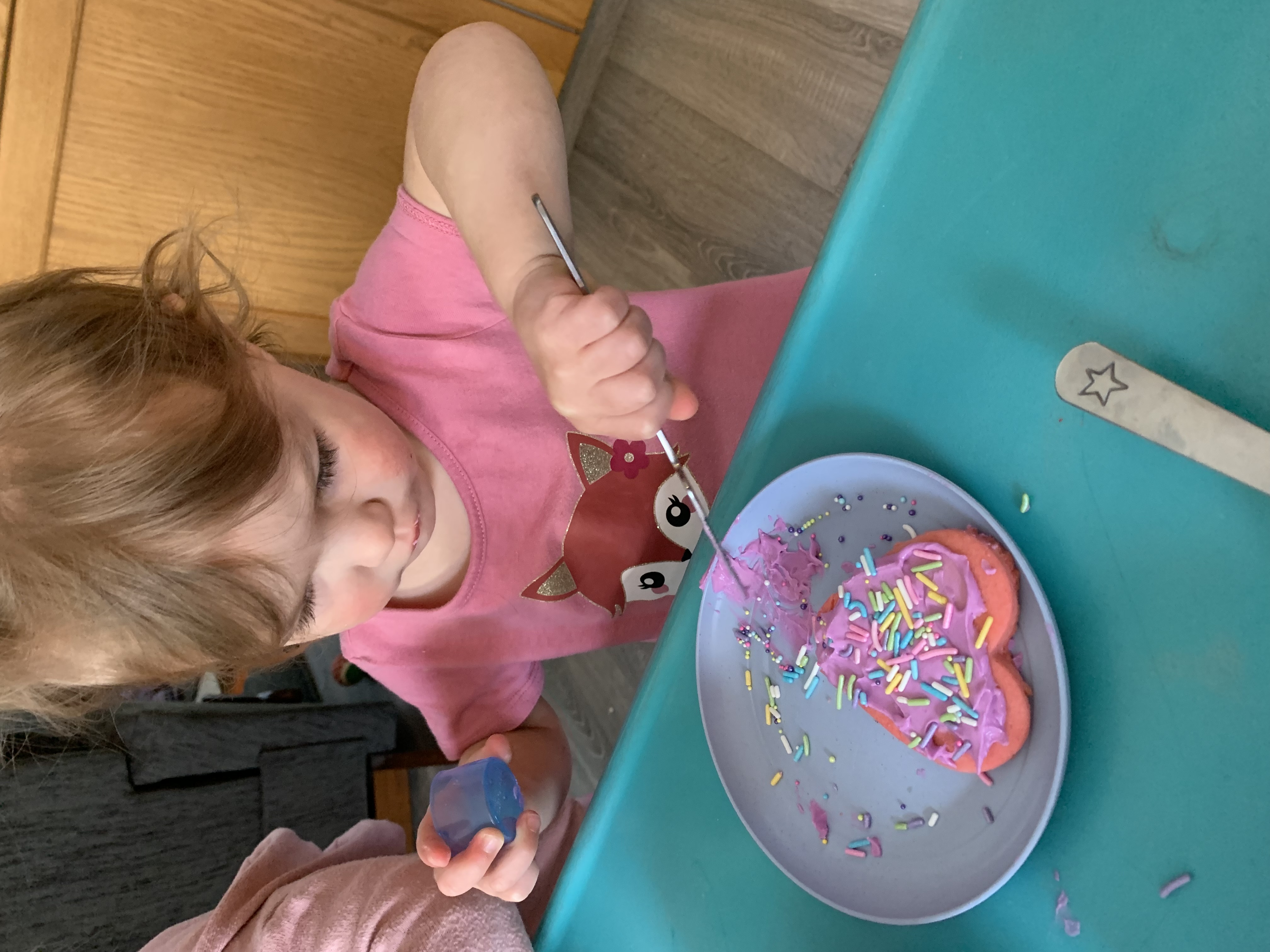
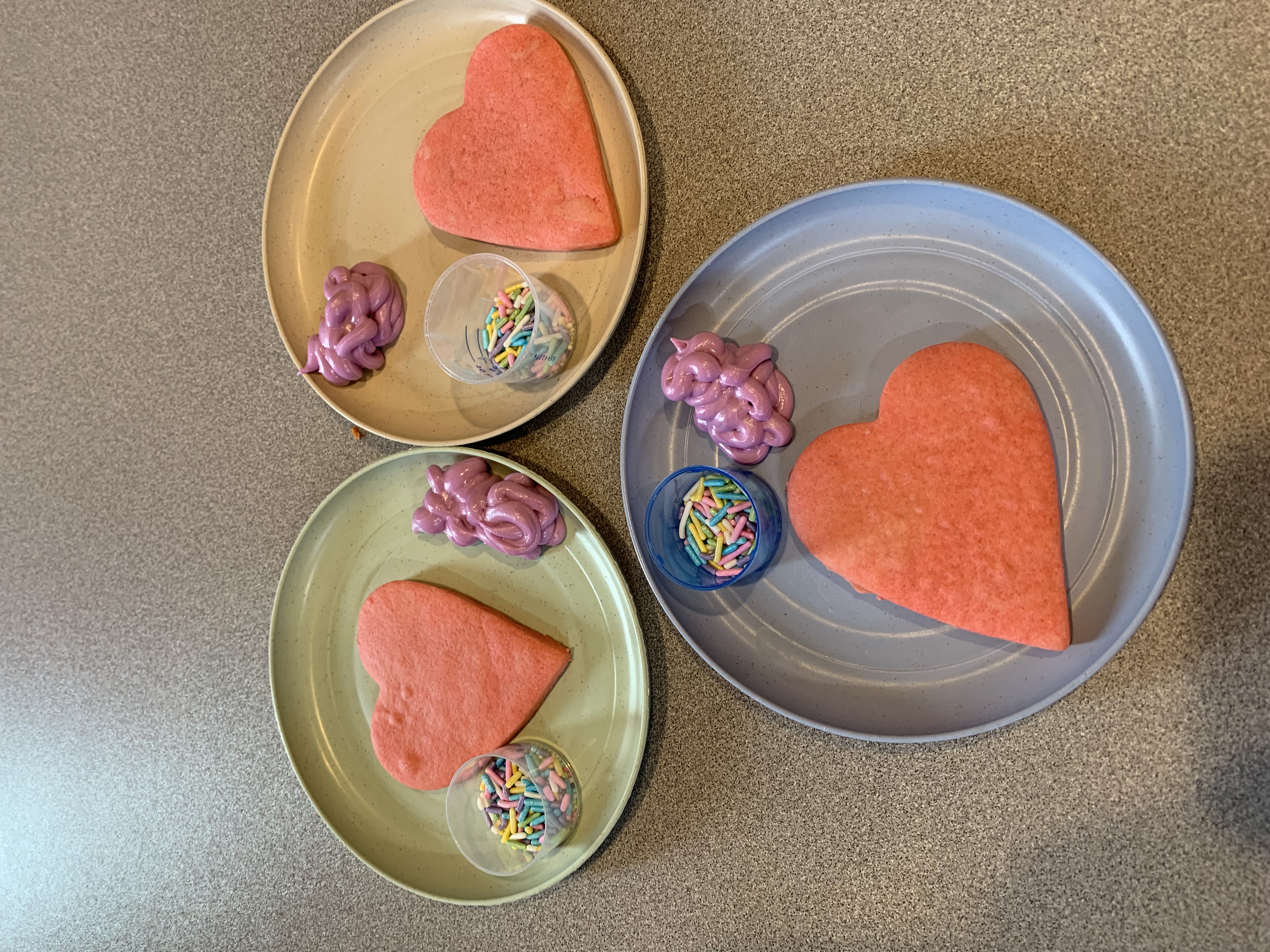
We offered heart-shaped sugar cookies, a small amount of frosting, and sprinkles for children to decorate in their own way. Some carefully spread frosting, others focused on scooping and sprinkling, and a few were more interested in tasting along the way.
This invitation supported fine motor development, independence, and sensory exploration, while also creating a shared experience around the table.
There was no expectation for how the cookies should look — the process was the focus.
Friendship Fruit Kabobs
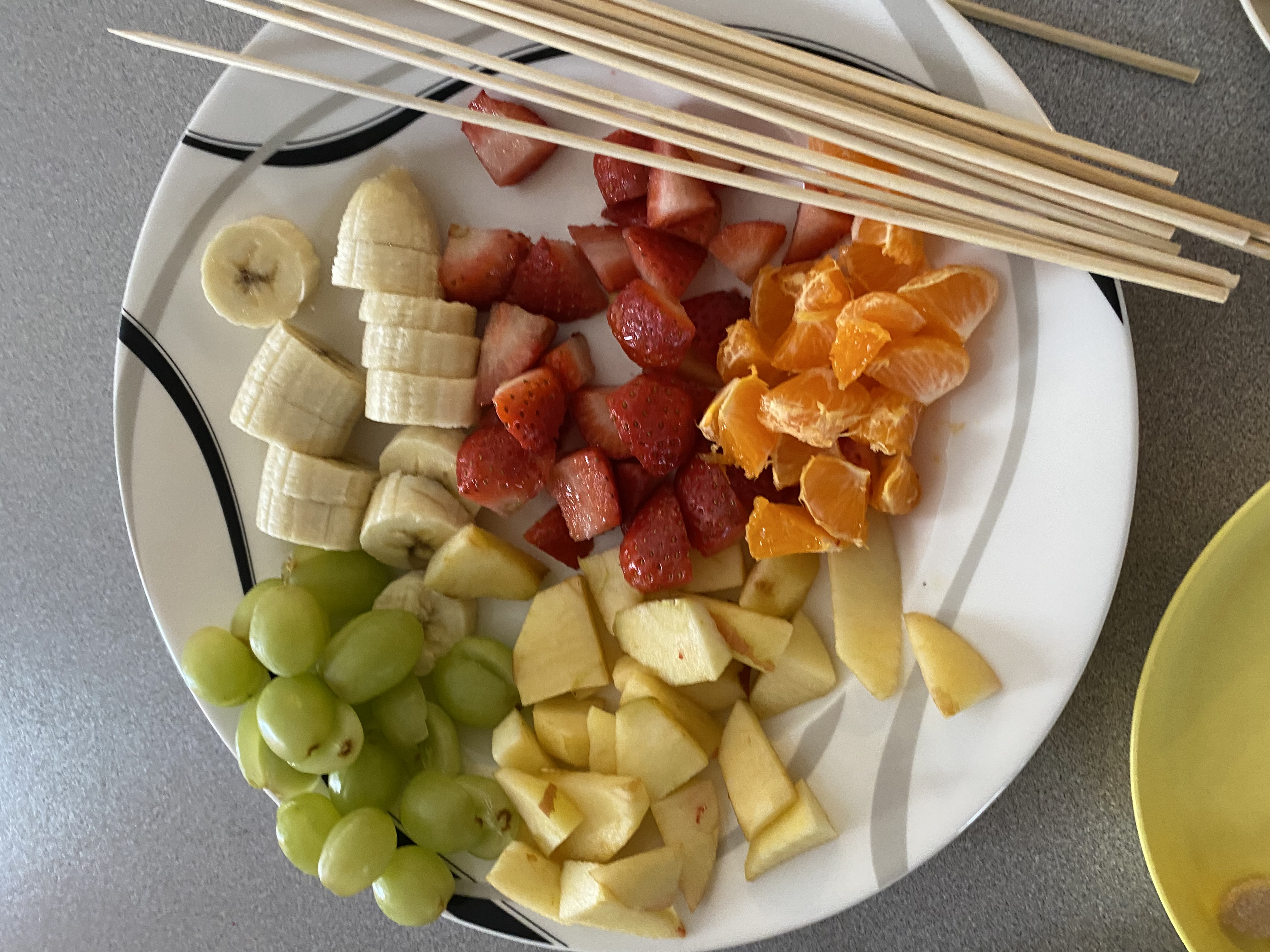
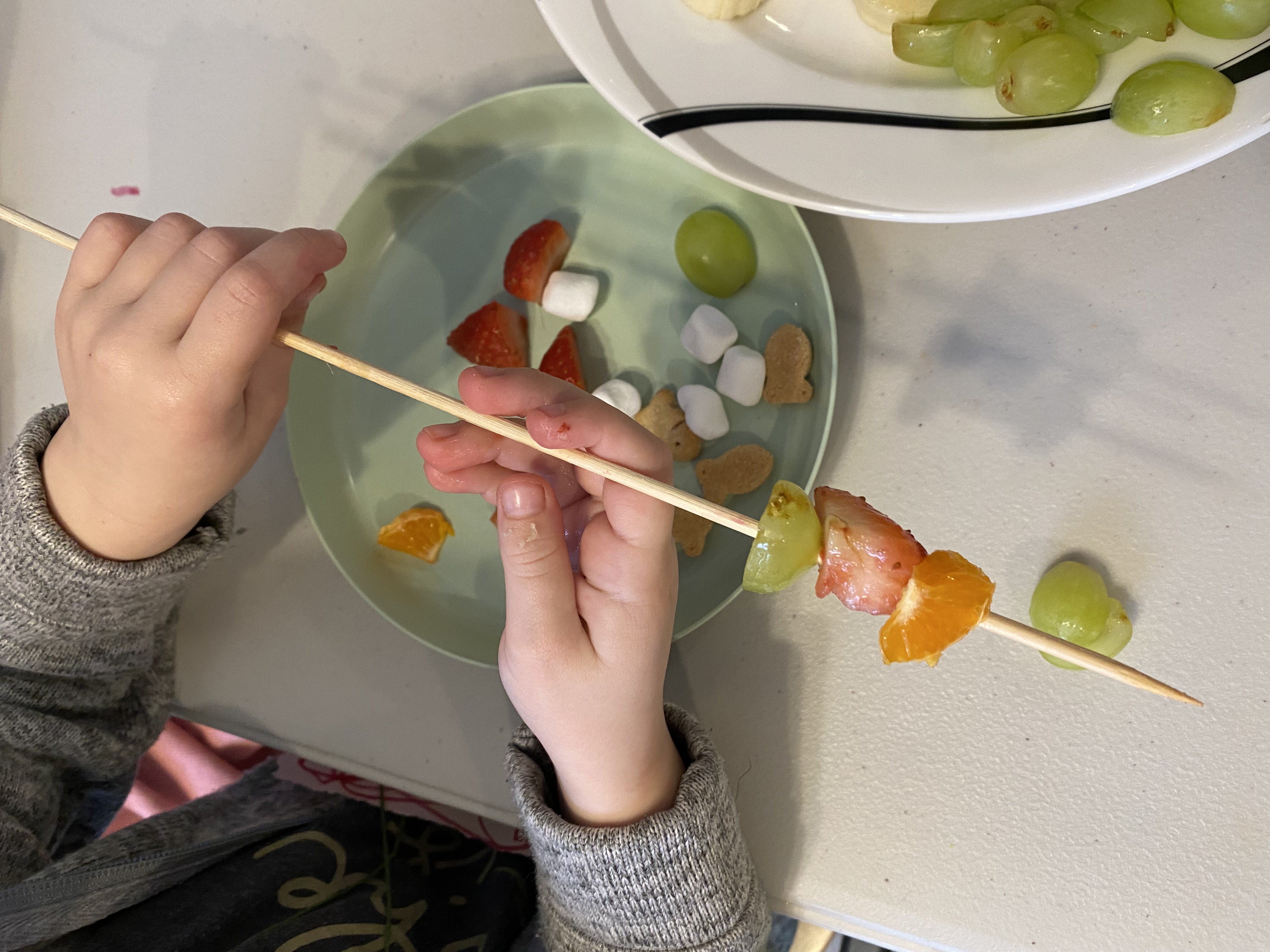
For this invitation, children were offered a variety of fruits and wooden skewers to create their own friendship fruit kabobs. Some children explored patterns and colour combinations, while others focused on the challenge of threading and removing the fruit.
This activity supported fine motor skills, hand-eye coordination, and conversation, while encouraging children to slow down and work at their own pace.
Food-based invitations like this are a simple way to build connection without adding extra pressure.
Valentine’s Trail Mix as a Play Invitation
Food-based invitations don’t need to be complicated to be meaningful. Making a batch of Valentine’s trail mix together is a simple way to invite children into the kitchen, support fine motor skills, and create space for conversation and connection. Scooping, pouring, and mixing ingredients allows children to participate at their own level, while the finished mix can be used for snacks over several days.
Here’s the Valentine’s Trail Mix recipe I use →
🔗 https://www.capablelearners.ca/valentinestrailmix
This kind of invitation fits naturally into the rhythm of the week and offers a gentle reminder that play, learning, and everyday routines can overlap in simple ways.
If you’d like a simple starting point, you can find the Valentine’s Trail Mix we use here.
Valentine’s Sensory Bin + Books
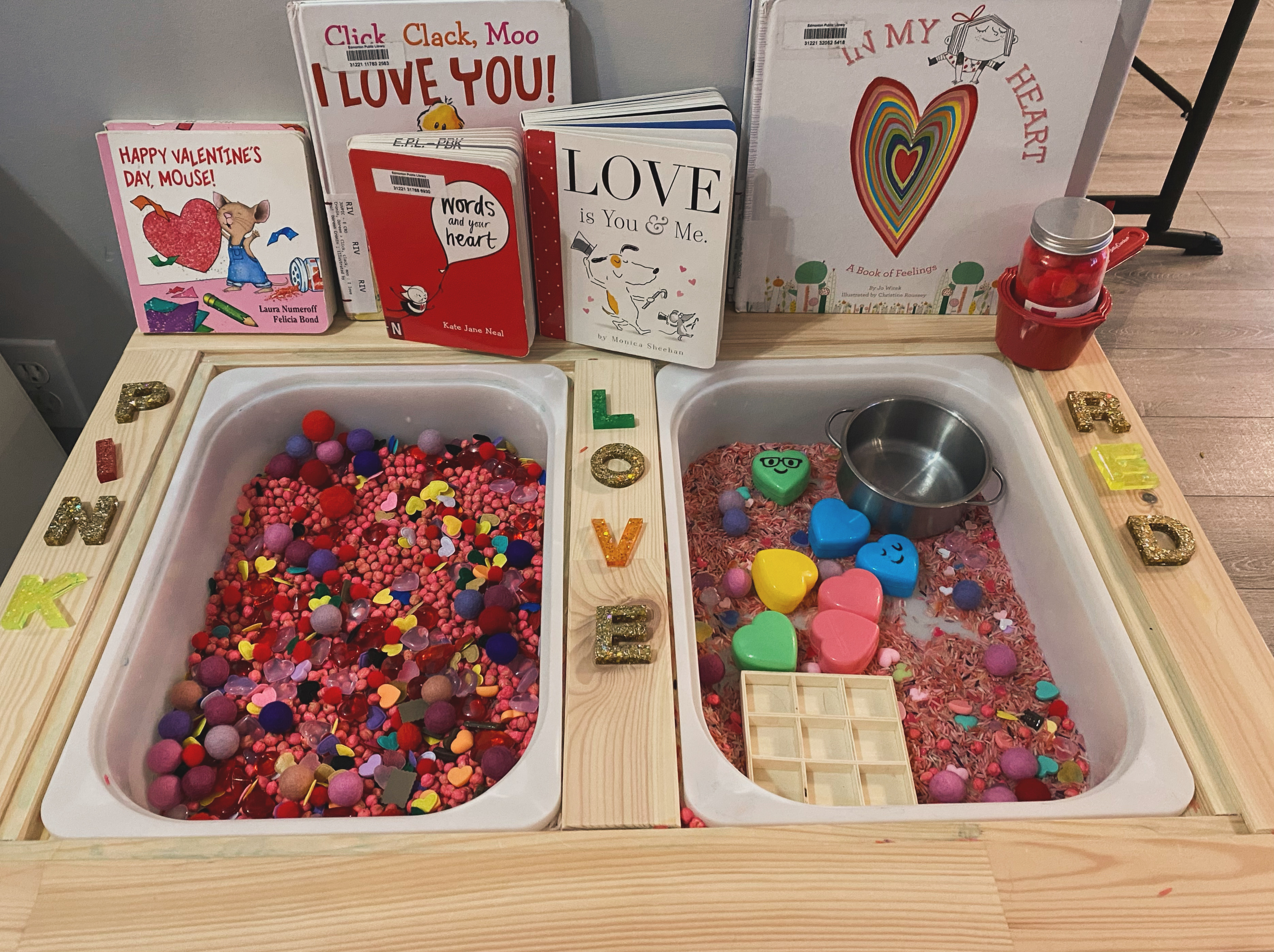
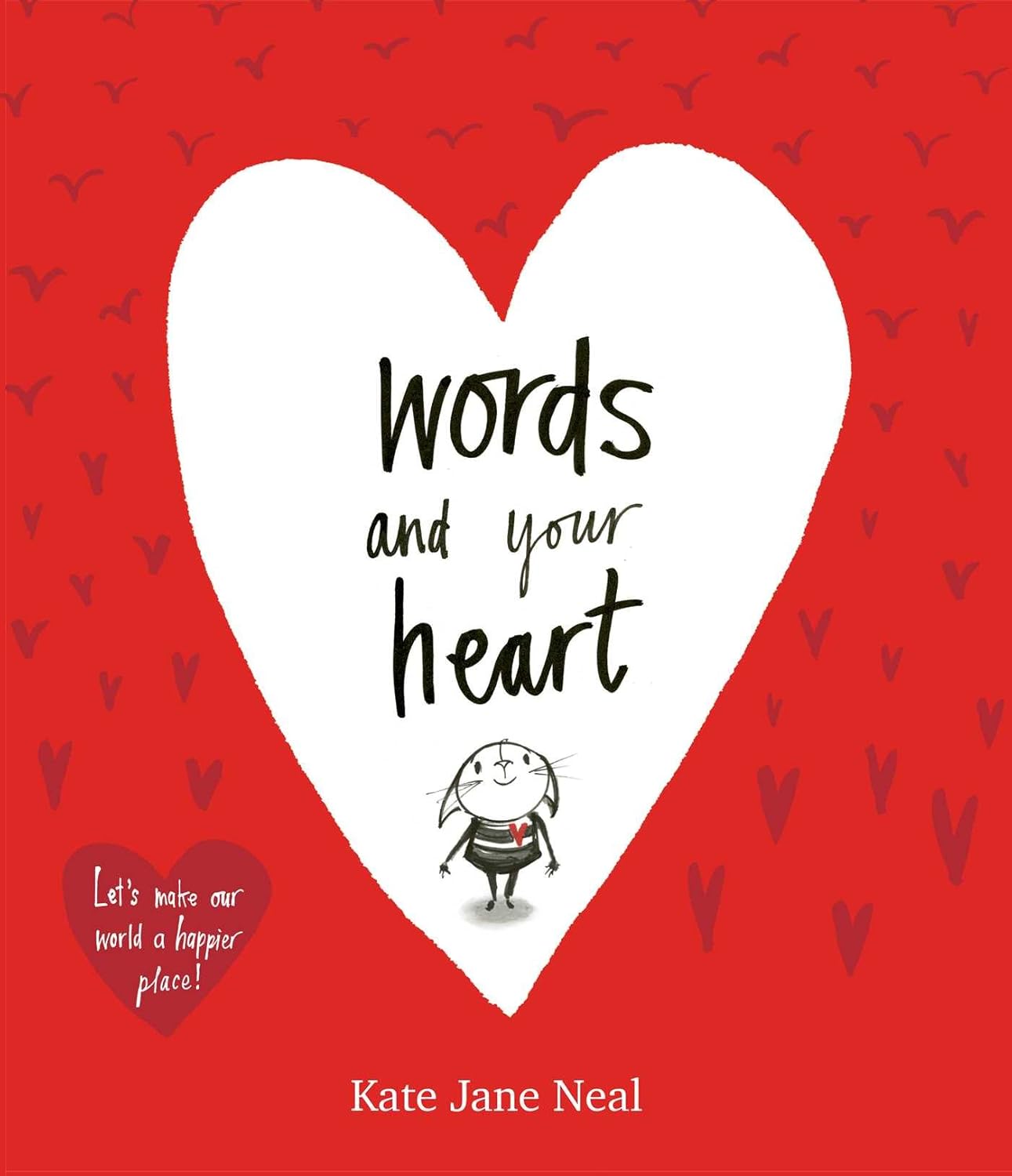
This Valentine’s sensory bin was filled with loose parts in different textures, colours, and shapes, and paired with a small collection of Valentine’s and love-themed books.
Children moved freely between exploring the bin and sitting with the books, sometimes narrating what they were doing or making connections between the materials and the stories.
Pairing sensory play with books creates opportunities for language development, storytelling, and quiet connection, without needing to structure the experience.

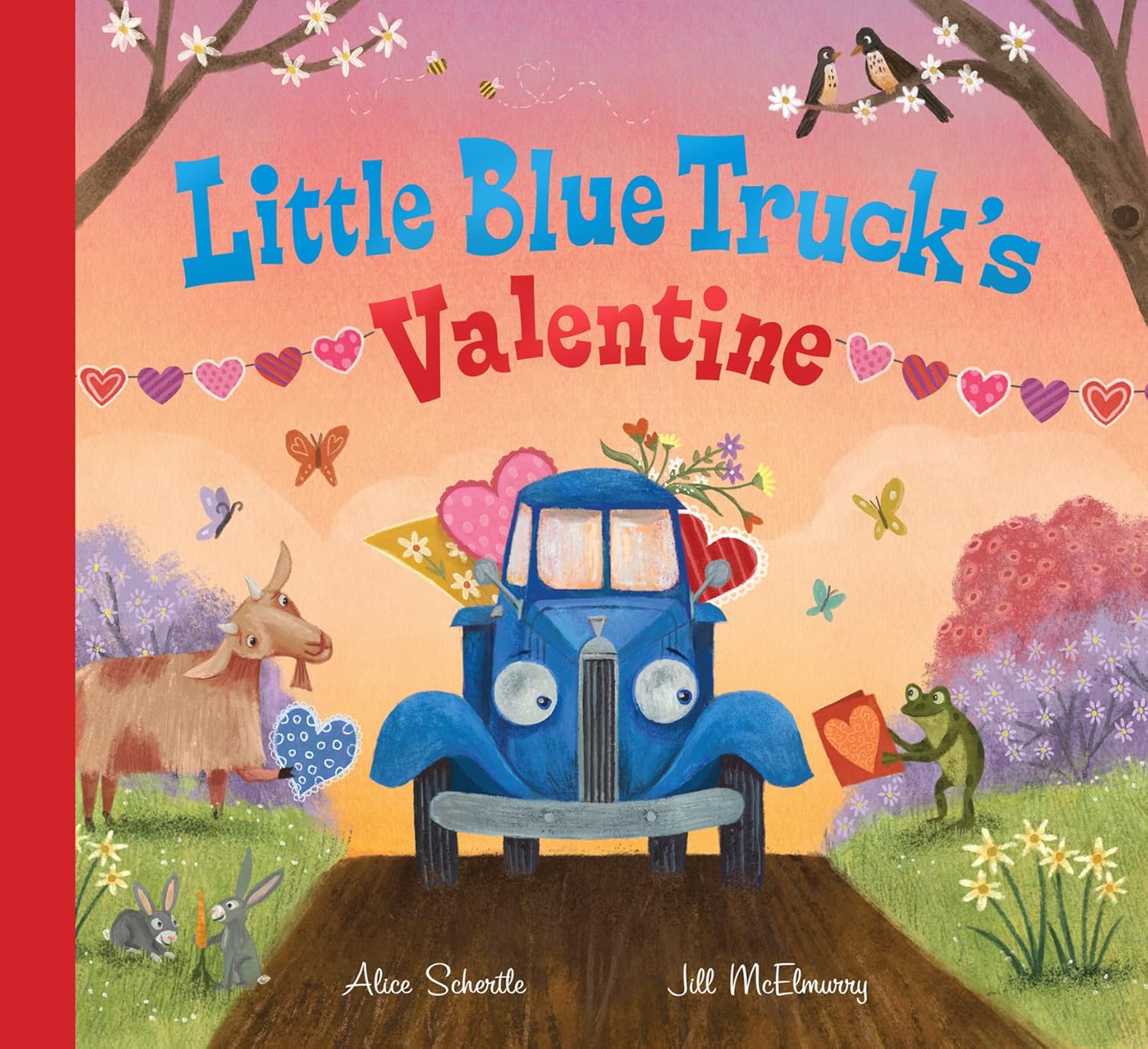 🔗Little Blue Truck's Valentines
Cardboard Heart Process Art Invitations
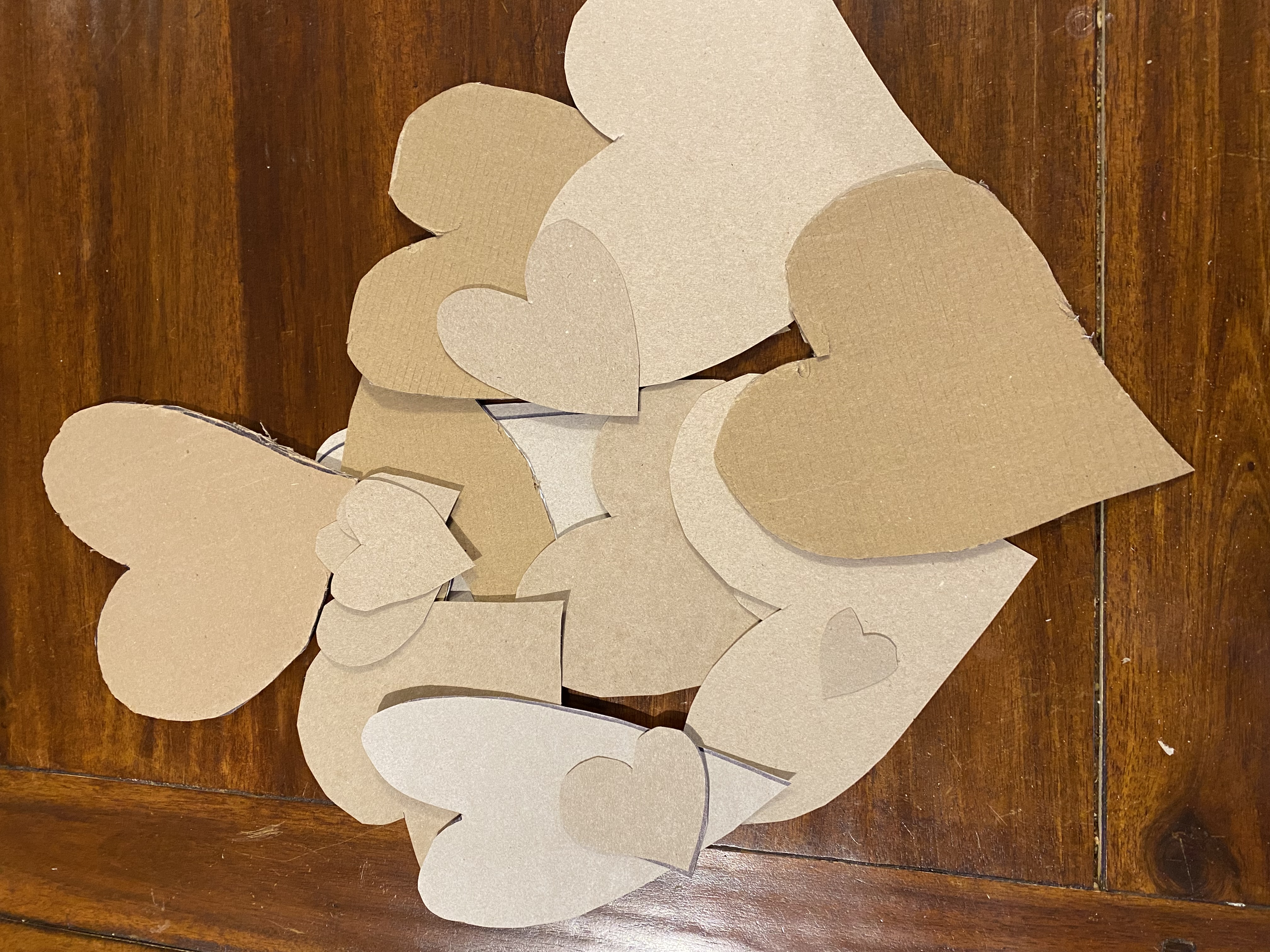
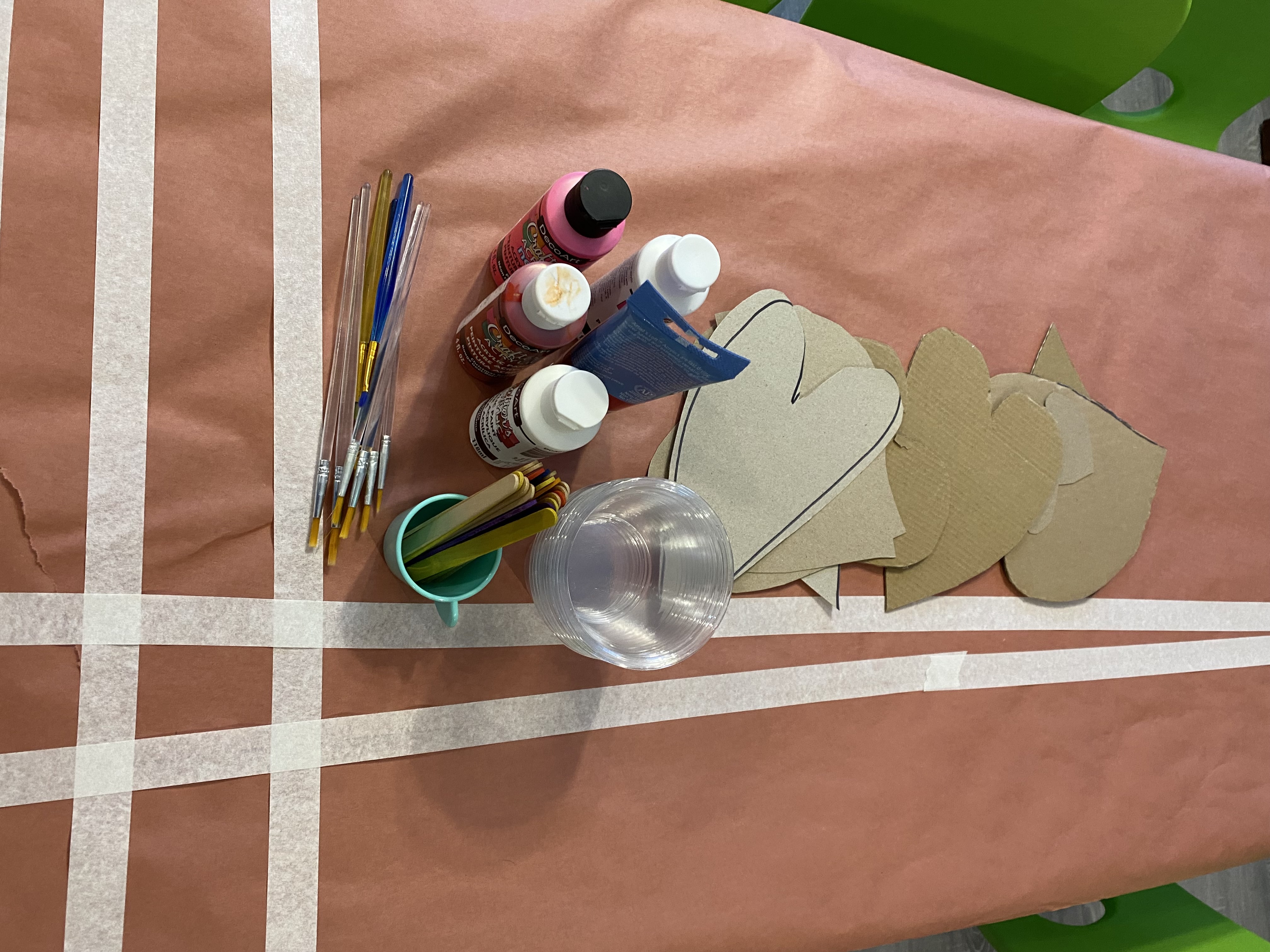
Cardboard hearts were offered alongside a variety of open-ended art materials. Children explored painting, layering, and experimenting with different tools and textures.
Each heart looked different — some were covered completely, others were worked on slowly over time. This invitation encouraged creative expression, problem-solving, and confidence, with no expectation of a finished product.
Valentine’s Art Tinker Tray
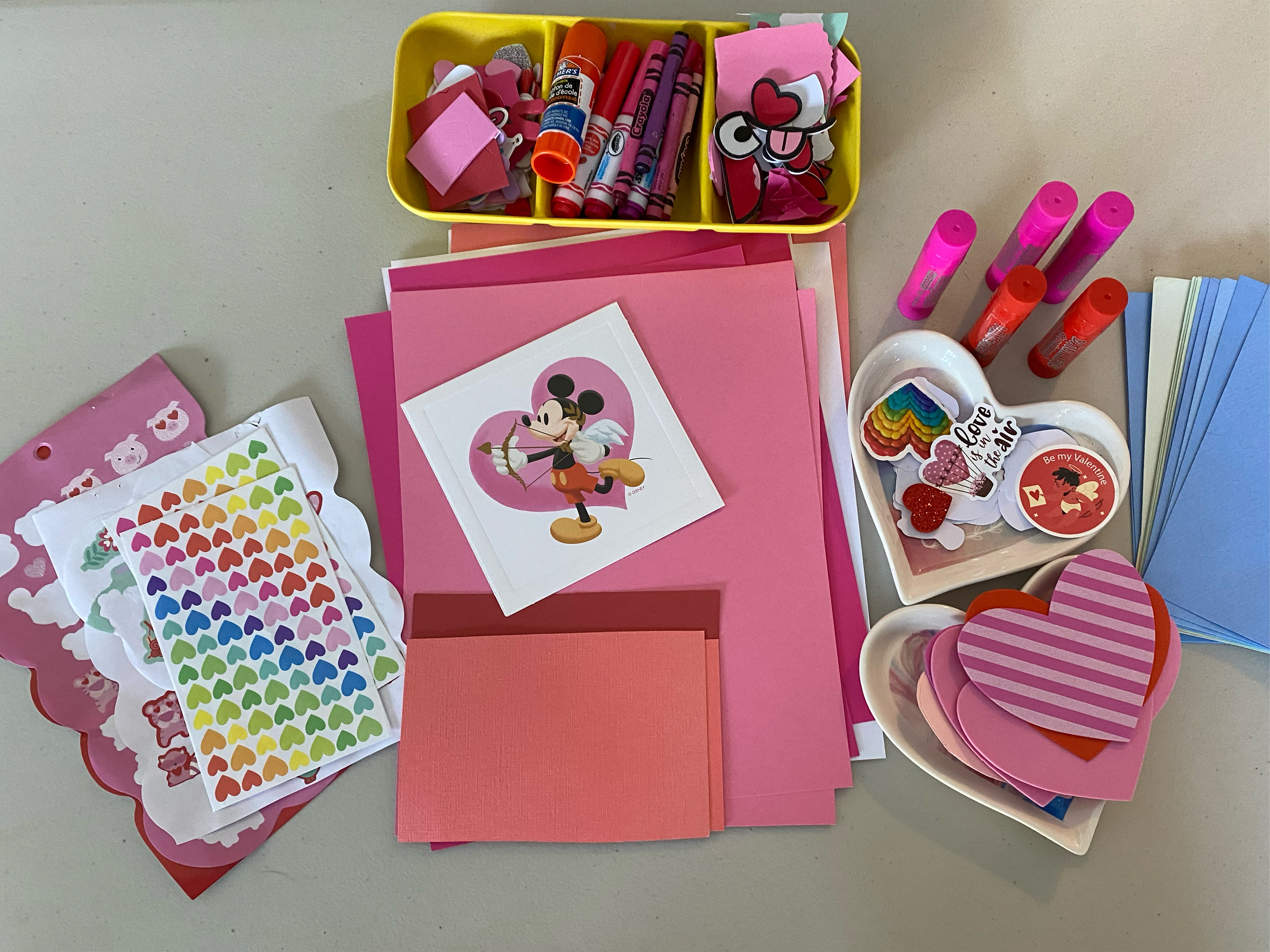
This tinker tray included cards, stickers, paint sticks, foam hearts, and different shades and types of pink paper. Children were free to combine materials, peel, stick, layer, and create in ways that made sense to them.
Some children focused on making cards, others explored the materials themselves, and a few returned to the tray multiple times.
Tinker trays like this support choice, creativity, and fine motor development, while allowing children to follow their own ideas.
“I Love You to Pieces” Art Activity
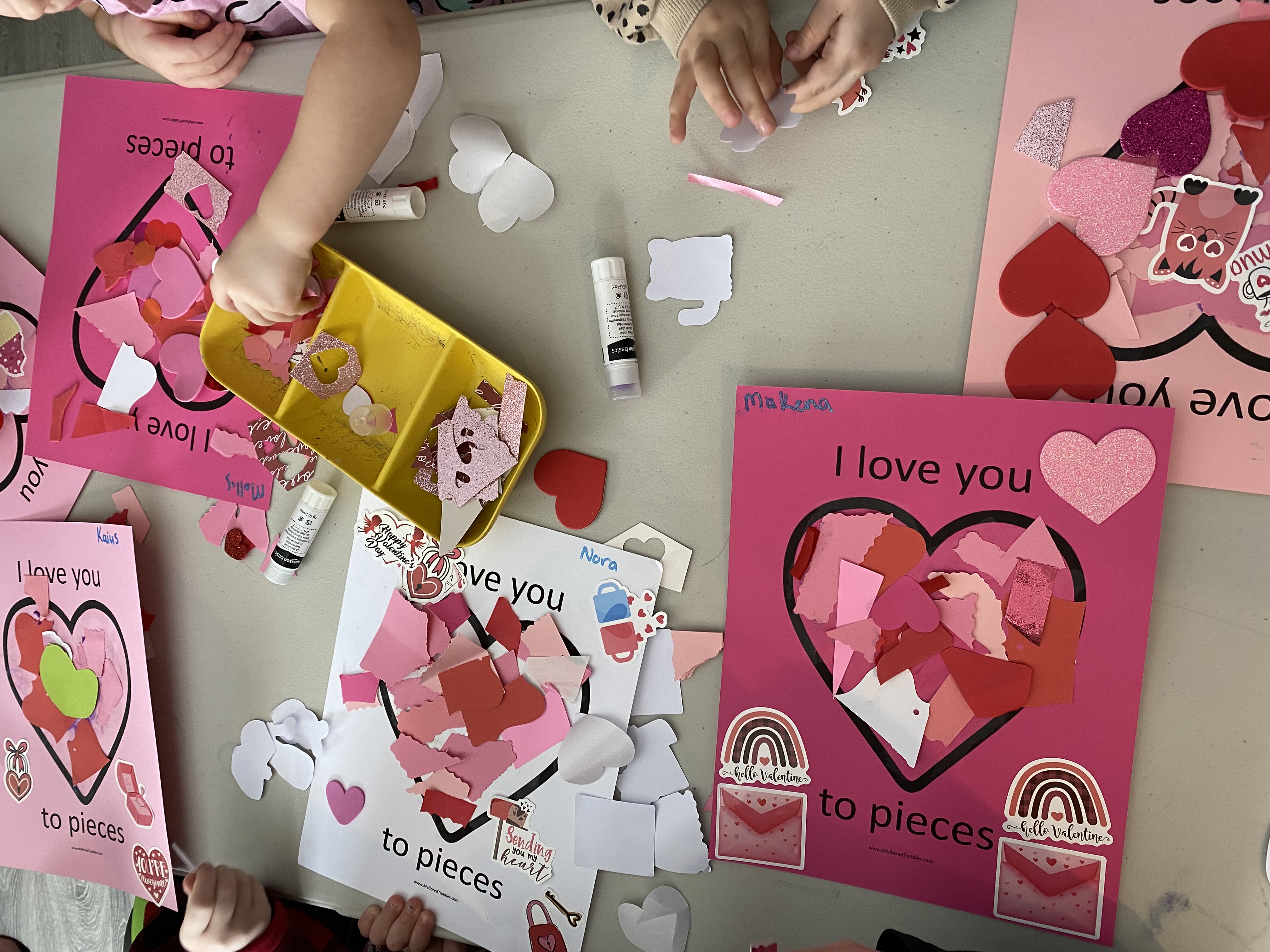
For this invitation, children were offered heart outlines and small pieces of paper in various colours and textures. Children glued, layered, and arranged the pieces in their own way.
This activity supported fine motor skills, spatial awareness, and early emotional expression, while reinforcing the idea that love and connection can be shown in many different ways.
The focus stayed on exploration rather than creating a specific outcome.
If you’re reading this and thinking
“I love these ideas, but I don’t know where to start…” — that’s totally normal.
If a simple print-and-play resource would be helpful, snag the free Valentine’s colouring pages here:
👉 Get your free Valentine’s colouring pages
🔗 https://www.capablelearners.ca/valentines-colouring
You can offer them any time — morning transitions, quiet moments, or when someone just needs something familiar and calm.
These Valentine’s invitations were not meant to be completed all at once. They were offered slowly, revisited when interest returned, and adapted based on the energy in the room.
If you’re finding that winter still feels long and you’re looking for flexible, play-based ideas that can carry you through the season and into spring, my 🔗 Winter Play Pack includes invitations designed to adapt to children’s interests and changing rhythms.
Written by Kayla, early childhood educator and founder of Capable Learners, supporting play-based learning at home and in early learning settings.

This post contains affiliate links. If you choose to make a purchase through these links, I may earn a small commission at no extra cost to you.