Why I Chose to Run a Dayhome — And Why It’s the Best Decision I’ve Ever Made
Jul 17, 2025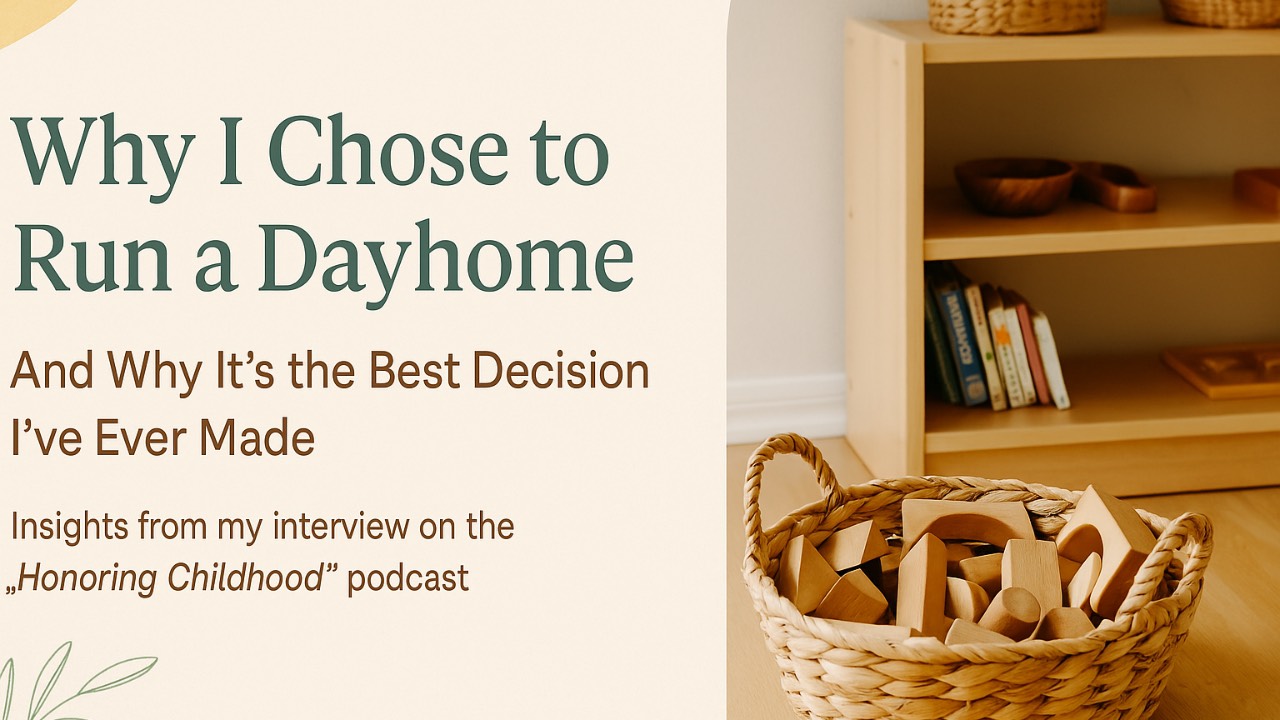
If you’re here because you believe in play-based learning too, you don’t need complicated setups to make a meaningful day.
I’ve put together a simple collection of sensory play ideas you can use right away (even on your busiest days).
👉 Start here with 57 simple sensory bin ideas you can actually use
When I opened my dayhome, I wasn’t just starting a business — I was choosing to build something deeply personal. A space where children could play freely, feel safe, and be truly seen. A space where I could show up every day as the educator I wanted to be — not one boxed in by systems, schedules, or someone else’s expectations.
Recently, I had the chance to talk about all of this and more on the *Honoring Childhood* podcast with Samuel Broaden. It was such a meaningful conversation — one I hope every parent and educator will take the time to hear. You can watch or listen to it below:
🎧 **Watch the episode here:**
👉 Click to watch on YouTube
What I Shared (and Why It Matters)
During the episode, we talked about everything from how I built my dayhome philosophy, to what it means to trust children, to the slow beauty of child-led days. Some of my biggest takeaways?
💛 1. Running a Dayhome Gives Me Freedom
I get to decide how our days flow. If the kids are engaged in deep play, I don’t have to rush them to the next activity. We follow their lead, and that’s where the real magic happens. There’s no pressure to “keep up.” Just permission to go slow and be present.
🧠 2. Play Isn’t a Filler — It’s the Foundation
Play is where learning *lives*. It’s where children build language, problem-solving, regulation, relationships, and creativity. I’ve built my program around the idea that children are capable learners — and when you trust them, you’ll see it.
🌱 3. It’s Okay to Do Things Differently
I don’t follow a school schedule. I don’t always stick to themes. I’ve found peace in doing things my way — and I want other educators to know they can, too. There’s no one “right” way to show up for children.
This is exactly why I’ve moved away from overcomplicating things in my dayhome.
It’s not about doing more… it’s about doing what actually works for the children in front of you.
If you’ve ever felt like you need to do all the themed activities or celebrate everything to be a “good educator”… you don’t.
👉 You don’t have to celebrate every holiday — read this here
Why This Episode Matters to Me
This podcast wasn’t just an interview — it was a chance to pause and reflect on how far I’ve come. To remember why I started. And to say out loud what so many dayhome educators feel: this work is important, even if it looks different from the norm.
Whether you’re a parent trying to choose childcare, or an educator wondering if you’re doing “enough,” I hope this episode reminds you of something essential: **you’re allowed to slow down. You’re allowed to do it your way. And the children will thrive because of it.**
---
Listen to the Episode
🎙 Click here to watch the full interview on YouTube
🔗 Listen here on Apple Podcasts:
Listen Here!
As we move into a new season (and for me, a whole new chapter), I always come back to simple, child-led invitations to play.
Especially in the summer months, when energy shifts and routines feel different, I lean into things that are easy, engaging, and flexible.
👉 These lemonade letter tracing pages are a simple way to bring play and learning together this summer
Let’s Keep the Conversation Going
Are you an educator who’s embraced the dayhome model? A parent wondering if a dayhome is the right fit? I’d love to hear from you.
📧 Or send me a message at Capable Learners
---
✨ Want to see what a play-based dayhome looks like in action?
👉 Follow me on Instagram
Related Resources
If this resonated with you, here are a few simple ways to keep things easy and meaningful:
👉 57 sensory bin ideas
👉 You don’t have to celebrate every holiday
👉 Lemon Activities for Preschoolers
👉 Sensory checklist