Messy Play Matters. But So Does the Educator Behind It.
Oct 29, 2026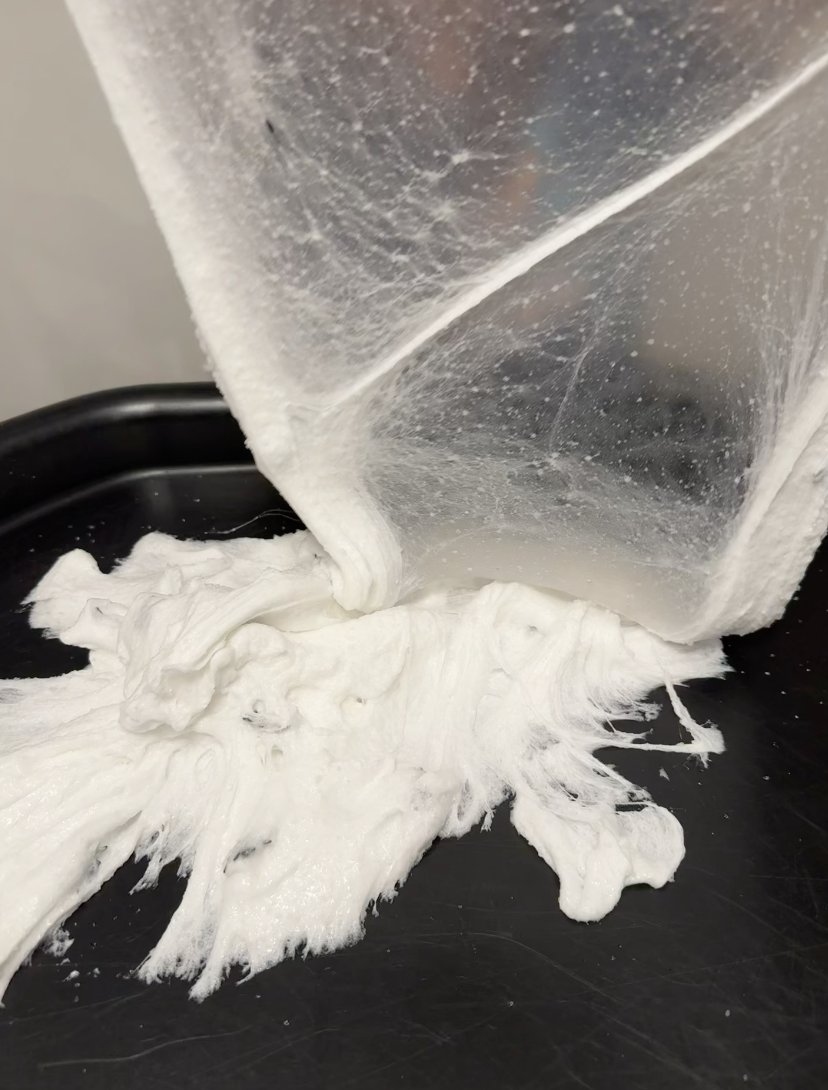
This post contains affiliate links. If you buy through them, I may earn a small commission at no extra cost to you. Thank you for supporting Capable Learners!
I love messy play.
If you've been following Capable Learners for any length of time, you probably already know that.
Sensory bins, water play, painting, play dough, slime, mud kitchens. These are all experiences that regularly find their way into my dayhome.
I believe deeply in the importance of giving children opportunities to explore materials, get messy, experiment, and discover things for themselves.
But can we talk about something that doesn't get discussed nearly enough?
Messy play can be a lot of work.
And when you're a dayhome educator working alone, sometimes that work feels like a lot more than you're willing to take on.
There's the preparation, the setup, the supervision, the cleanup, and everything else happening around you.
Because while the children are exploring the slime, lunch still needs to be made. Someone needs help in the bathroom. Another child needs support navigating a disagreement.
And there's no second educator coming to take over.
It's just you.
I think we need to make more space for conversations about the educator behind these experiences.
The Importance of Messy and Sensory Play
There's a reason I'm such a big advocate for sensory play.
Young children learn through hands-on experiences. They need opportunities to touch, manipulate, investigate, and explore the world around them.
When children are squeezing slime, pouring water, mixing colours, or digging through a sensory bin, there's so much learning happening.
- They're developing fine motor skills as they squeeze, pinch, pour, and manipulate materials.
- They're experimenting with cause and effect, testing ideas, solving problems, and building an understanding of how things work.
- They're developing language as they describe textures, share discoveries, and communicate with one another.
- And they're using their imaginations in ways we couldn't necessarily plan for.
One of my favourite things about sensory play is that it doesn't need a predetermined outcome.
I can put out a material with one idea in mind, and the children might take it in a completely different direction.
And that's okay.
Actually, that's what I want.
It's the children's job to explore the materials. It's not their job to recreate the activity I imagined.
But Who's Talking About the Work Behind the Play?
Social media is full of beautiful sensory invitations.
Colour-coordinated bins, elaborate themed setups, homemade materials, and perfectly arranged play spaces.
And don't get me wrong, I love seeing what other educators create. I get so much inspiration from this community.
But sometimes I wonder if we're creating unrealistic expectations for ourselves.
Because what we don't always see is everything happening behind the scenes.
The time spent gathering materials.
The money spent purchasing ingredients.
The preparation that happens after the children have gone home.
The cleanup.
Oh, the cleanup.
And when you're operating a dayhome, that all falls on you.
There are days when I have the energy to pull out all the messy materials and embrace whatever happens.
And there are days when the thought of washing one more container or wiping down another table is enough to make me put the sensory bin back on the shelf.
And I don't think that makes me any less of an educator.
I think it makes me realistic about my capacity.
You Don't Have to Do It All
In the past, I wrote about why educators don't need to celebrate every holiday in their programs.
And I think this conversation fits right alongside that one.
Just because something is fun, meaningful, or educational doesn't mean we have to do it.
We don't need to celebrate every holiday.
We don't need to recreate every activity we see on Instagram.
And we certainly don't need to offer elaborate sensory invitations every single day.
Somewhere along the way, I think we've started confusing the amount of activities we offer with the quality of the care we provide.
But those aren't the same thing.
A thoughtfully prepared environment, meaningful relationships, uninterrupted play, and an educator who is present and engaged are incredibly valuable.
Children don't need us to constantly entertain them.
They need time, space, materials, and opportunities to explore.
We're not advocating for less play. We're advocating for less pressure on educators to manufacture play.
And I think that's an important distinction.
Our Halloween Spiderweb Slime Experience
With Halloween approaching, I came across a spiderweb slime recipe shared by another creator on Instagram.
I thought it looked like such a fun experience, so naturally, I wanted to give it a try in my dayhome.
And it was pretty incredible.
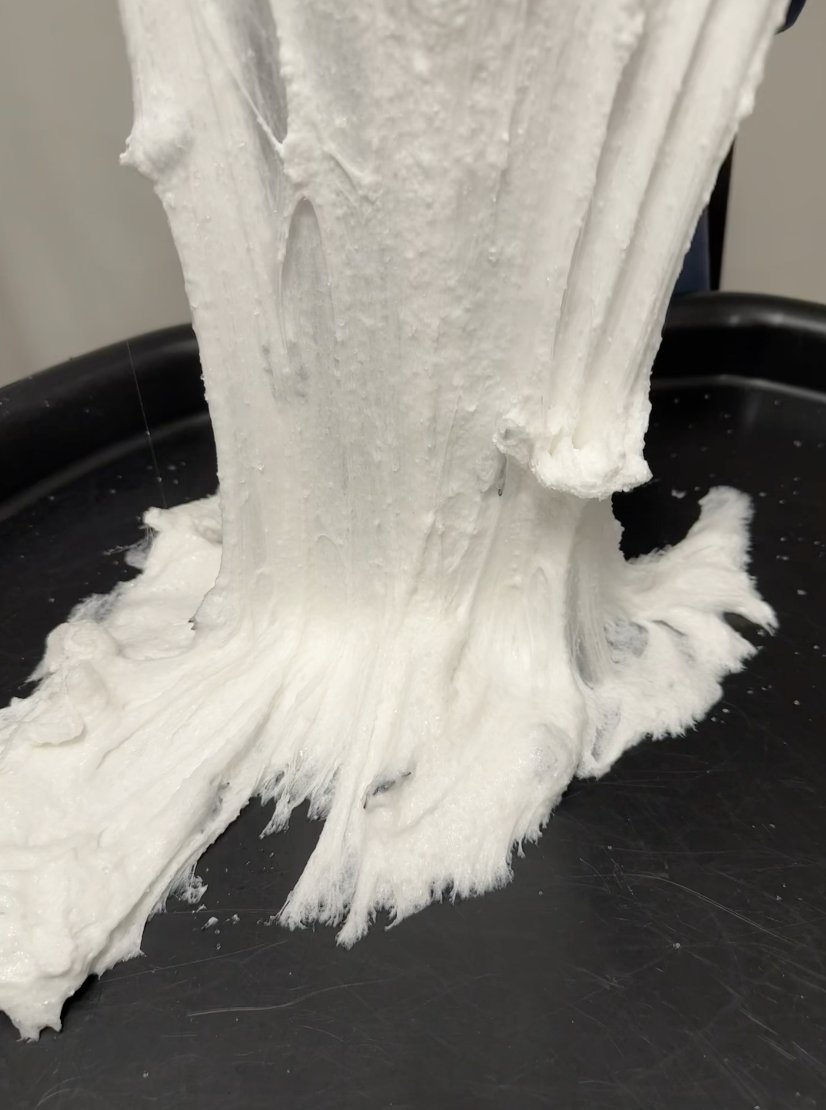
The slime stretched into these long, thin strands that looked just like spiderwebs.
There was so much opportunity to pull, stretch, manipulate, experiment, and explore the texture.
What I loved most was that the material itself was the invitation.
It didn't need an elaborate Halloween setup or a list of instructions for the children to follow.
We simply explored what the slime could do.
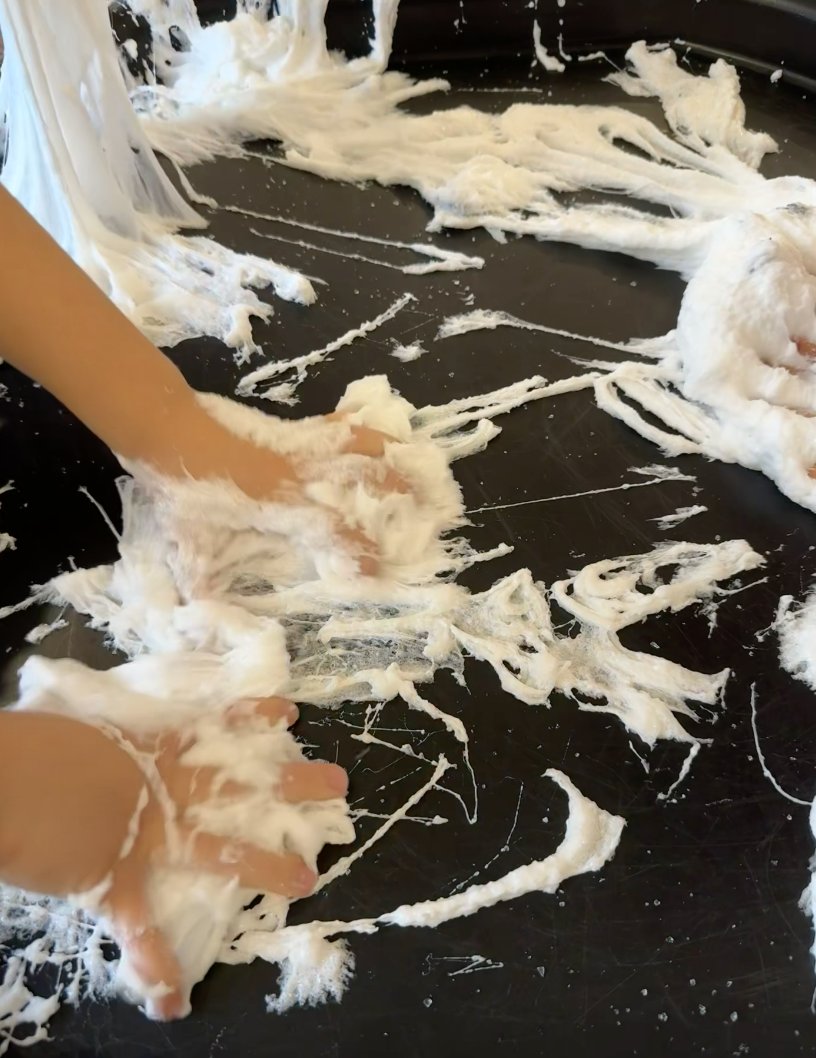
And that's one of the things I love about open-ended play.
Children don't need us to direct every moment of their experience.
Sometimes all we need to do is provide an interesting material and see where they take it.
Want to Make Your Own Spiderweb Slime?
I was inspired by a recipe shared by @oakhoney_tessa on Instagram.
You can find the original recipe here: Spiderweb slime recipe by @oakhoney_tessa →
Prefer a written version? You'll find step-by-step spider web slime instructions here: Spider Web Slime at One Little Project →
The instant snow I used:
Let It Snow Instant Snow Powder on Amazon →
A quick safety note: This particular slime uses borax and instant snow. These materials require careful handling, and the finished slime isn't appropriate for every age or group. Adults should prepare the mixture according to product directions, closely supervise play, prevent ingestion, and wash hands afterward. Always consider the ages, abilities, and needs of the children in your care.
Sensory Play Doesn't Have to Be Complicated
Here's something I want more educators to remember.
Sensory play doesn't always require a recipe.
It doesn't always need a theme.
And it certainly doesn't need to look like something you'd find on Pinterest.
Sometimes sensory play looks like children digging in the mud after a rainy morning.
Sometimes it's filling and dumping containers at the water table.
Sometimes it's exploring snow, collecting leaves, or mixing ingredients while baking.
And sometimes it's simply giving children access to play dough and letting them decide what happens next.
These experiences matter too.
In fact, some of the richest play experiences I've witnessed in my dayhome have happened without any elaborate preparation.
I think sometimes we get so caught up in creating experiences for children that we forget how capable they are of creating their own.
Finding a Balance That Works for Your Program
I'm not going to tell you to stop offering messy play.
That would be pretty hypocritical coming from someone who loves it as much as I do.
But I am going to encourage you to think about what works for you and your group.
- Maybe that means saving the really messy experiences for days when you have more time.
- Maybe it means taking the paint outside.
- Maybe it means offering smaller amounts of materials or involving children in the cleanup.
- And maybe some days it means choosing not to put out the slime.
That's okay too.
I think it's important that we recognize the difference between providing children with meaningful opportunities to play and feeling obligated to constantly create new activities.
You can offer a rich, play-based program without exhausting yourself in the process.
The Educator Matters Too
I think this is where I want to leave this conversation.
We spend so much time talking about what children need.
And we should.
Their development, their interests, their relationships, and their experiences are at the heart of what we do.
But I think we also need to talk about what educators need to be able to do this work well.
Time.
Support.
Realistic expectations.
And permission to recognize our own limits.
Because when you're working alone, your energy and capacity matter.
You don't have to celebrate every holiday.
You don't have to make every sensory recipe.
You don't have to turn every day into an elaborate experience.
And you don't have to prove the quality of your program through the number of activities you offer.
You can believe in the importance of messy play and still decide that today isn't the day for slime.
Both things can be true.
At the end of the day, I want the children in my care to have opportunities to explore, experiment, get messy, take risks, and follow their own ideas.
But I also want to be an educator who has the time and energy to be present for those experiences.
Because meaningful play isn't about how much we put out.
It's about what happens when we give children the freedom to explore.
And sometimes, doing less gives us more room for exactly that.
Free for You
The Sensory Bin Materials Checklist
Every base, filler and tool you need for simple sensory play, so setup takes minutes, not an evening.
Download it free →
Shop This Post
57 Sensory Bin Ideas
A full year of simple sensory play with quick setups using materials you already have, for the days you do want to pull out the bin.
Get the ebook →
What We Used
- Let It Snow Instant Snow Powder (the instant snow in our spiderweb slime)
- Find more of the tools and materials I use in my dayhome in my Amazon storefront.
How do you balance messy play with everything else on your plate? I'd love to hear in the comments.
— Kayla, Capable Learners
Follow along on Instagram: @capablelearnersdayhome
At Capable Learners, I believe children are capable, play matters, and educators deserve support too.
